
An editorial on the relationship between people, responsibility and guns.
Category Archives: Uncategorized
Moving Forward after the Postcards
Currently my project is a data-collector, a source, it’s data mining.
But what could it become -> where can it grow?
Currently people: find the card, share their story, read other stories
But what could it do for other people? like a policy maker, how is this method effective for them? and what becomes possible?
What do you do with the data, how do you transform it or bring it to life?
Currently the postcards are a promotion itself for social action, activism, and works within several different entities -> online for spread and sharing -> postcard for the personal touch.
Photoshopping Thumbs on Guns
I found this and I thought this was a really funny idea, and could have been a design fiction project.
The images are from a blog called Thumbs and Ammo, and their tagline is “Real tough guys don’t need guns, they just need a positive, can-do attitude”

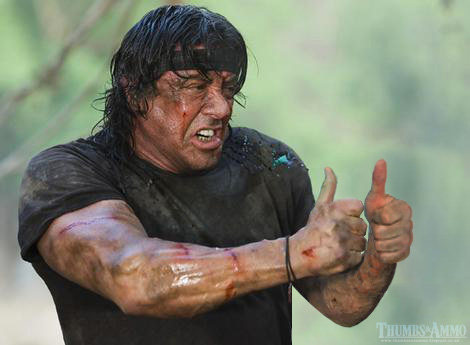







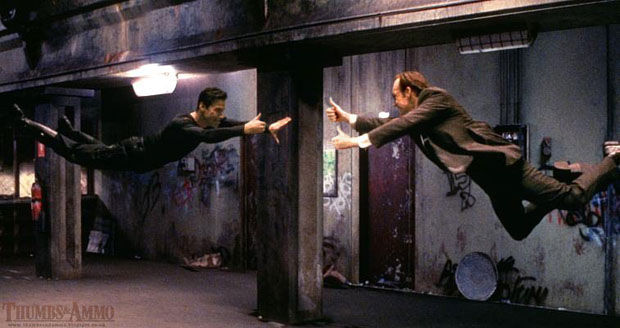
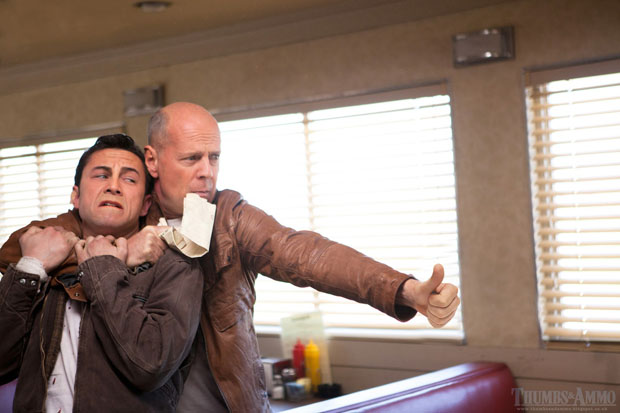
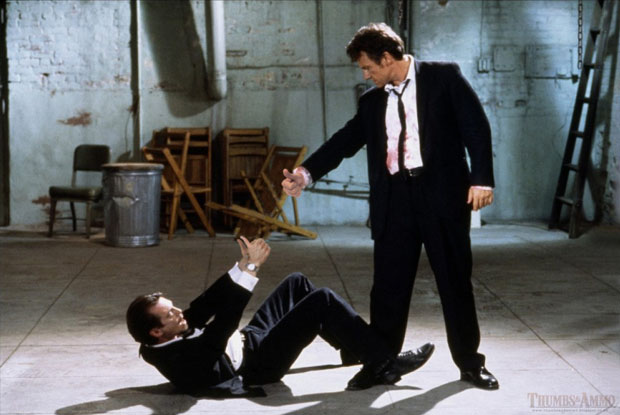
I found all the article here
Gun Safety Campaign- Early Ideas
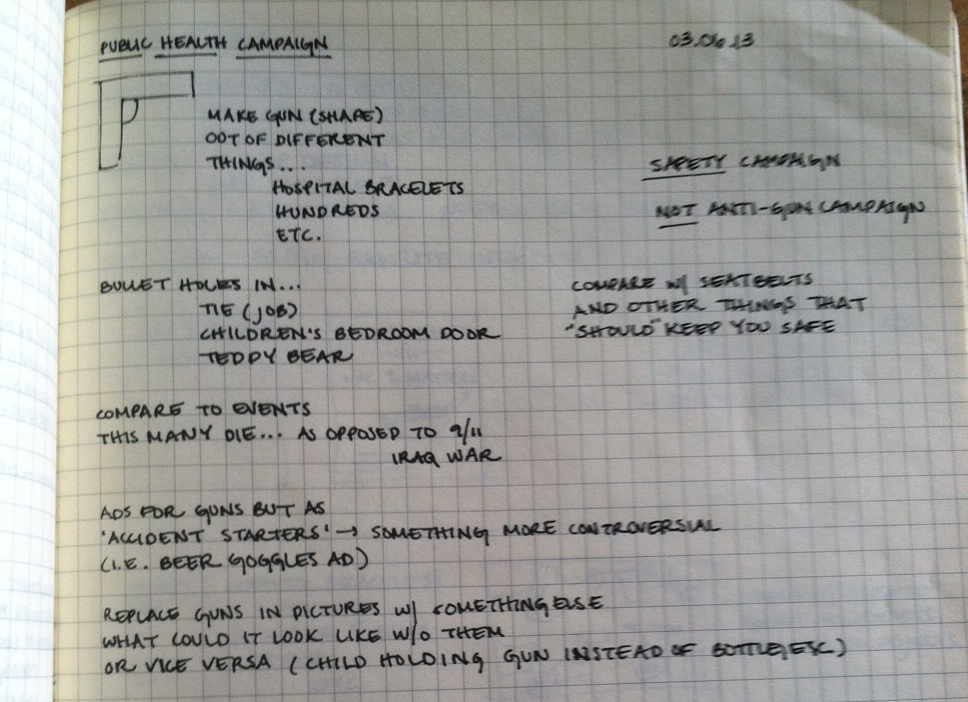
Based on other public health campaigns, I began to develop ideas for gun safety promotions. Some ideas I explored were:
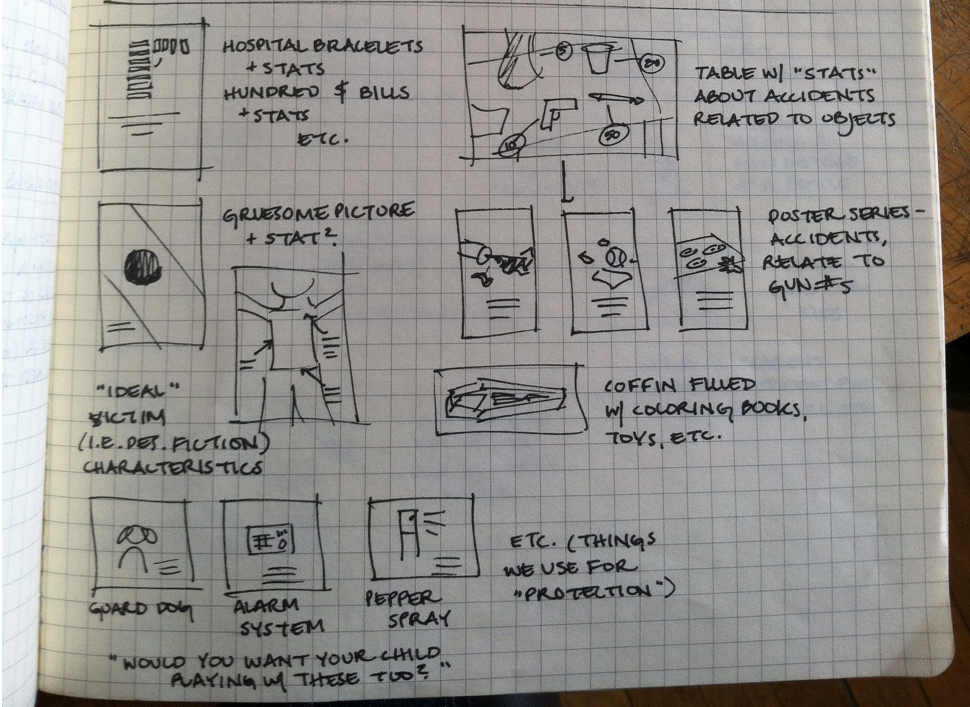
-Making a gun/shape out of different things (hospital bracelets, hundred dollar bills, etc.)
-Comparing gun statistics to other events (this many die a year…as opposed to 9/11, war, etc,)
-Comparing guns with seat-belts and other things that we use to keep us safe)
-High-quality ads for guns as “accident starters”, etc. (see beer goggles ad)
-Replace guns in pictures with something else (what else could soldiers be holding); replace everyday objects with guns (what if a baby held a gun instead of a bottle)
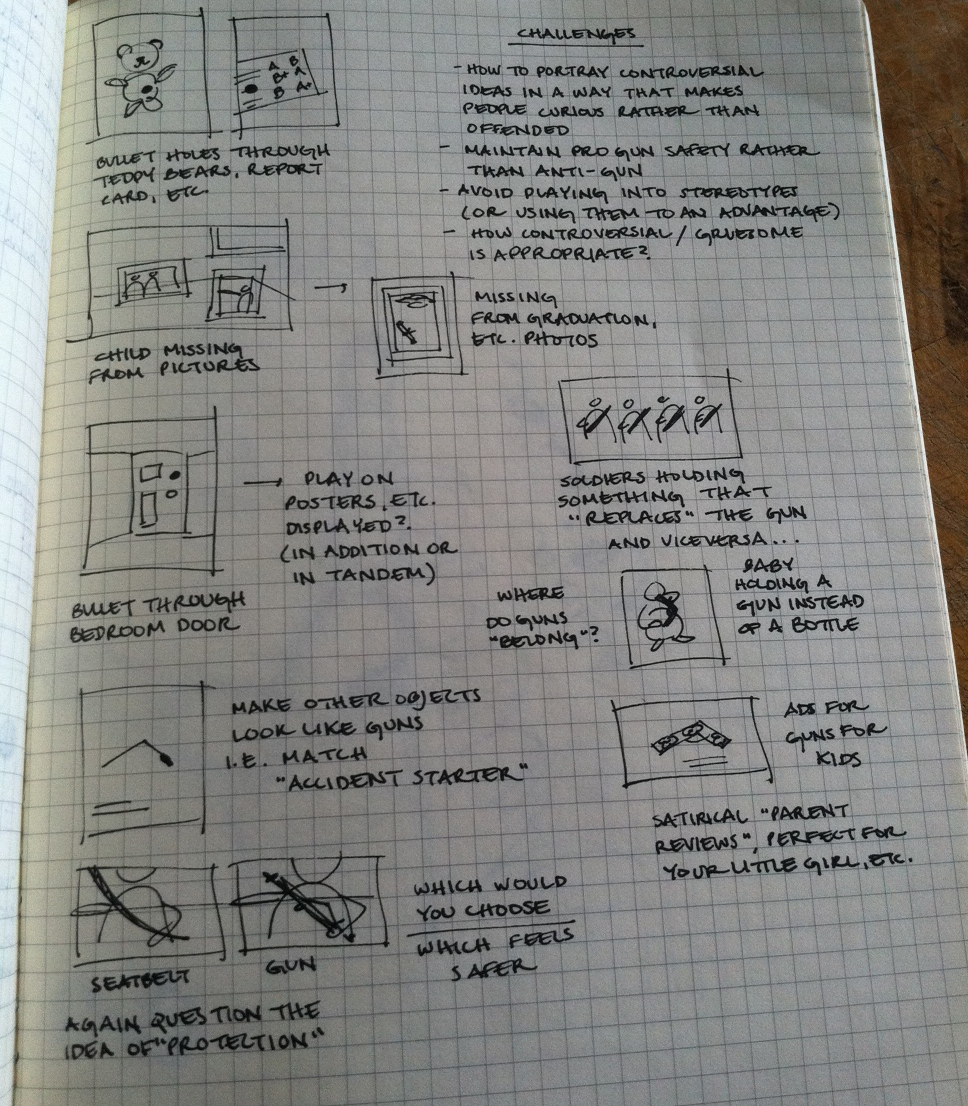
These early ideas were visualized and expanded upon in the sketches below. As I worked, I began to understand the challenges that I am facing in doing this project…
Challenges:
-How to portray controversial ideas in a way that makes people curious rather than offended?
-Maintain pro gun safety rather than anti-gun, or expose these subtle differences through the work
-Avoid playing into stereotypes (or use them to my advantage)
-How controversial/gruesome/shocking is appropriate? What are the limitations?
Stakeholder-Commander of Police
Commander of Pittsburgh police
straw purchases, offering alternatives, proliferation of handguns
– Thinks that firearm education in schools is important and supports the DARE program that is taught is PGH
– When asked about his opinion about Child Access Prevention Laws he refused to comment.
– He believes that one of the key ways that crime can be reduced in the community is to offer alternatives to youths.
– He works to target violent groups in the community and put pressure on them, and make it so that the police’s presence is felt.
– He believes that straw purchases are a much larger issues when it comes to hand guns getting into the hands of criminals and he suggested that we talk to the Firearms Tracking Unit, which is part of the ATF. He connected us with someone in the firearms tracking unit, but they did not want to comment on anything.
– He said that most of the high profile crimes in Pgh are from homicide and sexual assault, and that on average there are about 3-4 shootings per month in Pgh.
– He also believes that it is very rare that children are “accidently” shooting themselves or being shot. He sees gun violence as a product of conflict.
Numeracy and Risk
One of the things that has come up a few times over the first half of the semester is the ability of people to correctly interpret and understand the numbers in the statistics we’ve talked about. I came across a couple papers that attempt to explore the relationship between risk perception and numeracy.
The first paper by Schwartz et al. looked at how women of varying numeracy levels were able to use and understand quantitative information about mammograms. They found that basic numeracy in their sample was quite low (tested on three basic questions that determined numeracy – only 16% of the women could answer all three correctly). When provided with risk reduction information, most women overestimated the effectiveness of screening mammography. Higher numeracy scores were also associated with accuracy in applying the risk reduction information. They also found a large improvement in accuracy by adding the baseline risk to absolute risk reduction data. By adding the baseline risk, people are better able to understand how the screening will help them personally.
The second paper by Dieckmann et al. explores how decisionmakers of varying numeracy levels utilize narrative evidence and probabilities when making risk judgments about a potential terrorist attack. When presented with simple likelihood estimates and no narrative evidence, people with lower levels of numeracy perceived greater risk. They also found support for the idea that less numerate decisionmakers paid less attention to likelihood information when also presented with narrative evidence (they also rated the narrative evidence as higher in usefulness, knowledge, and trust). A second study conducted by the authors helped to examine how decisionmakers used both the narrative and the likelihood evidence when both were present. Less numerate decisionmakers were again found to believe that the attack was more likely than more numerate decisionmakers.
References:
Schwartz, L. M., Woloshin, S., Black, W. C., & Welch, H. G. (1 December 1997). The Role of Numeracy in Understanding the Benefit of Screening Mammography. Annals of Internal Medicine, 127(11), 966-972.
Dieckmann, N. F., Slovic, P., & Peters, E. M. (2009). The Use of Narrative Evidence and Explicit Likelihood by Decisionmakers Varying in Numeracy. Risk Analysis, 29(10), 1473-1488.
And the website!
I think the website is mostly done!
The about page describes the project, I can set up more categories depending on the feedback I receive. I chose a theme that will show off all of the postcards (so hopefully I’ll receive some back!
Next is starting it to populate it with a few people so it looks less bare!
check it out at www.shareyournarrative.wordpress.com
Postcard Designs
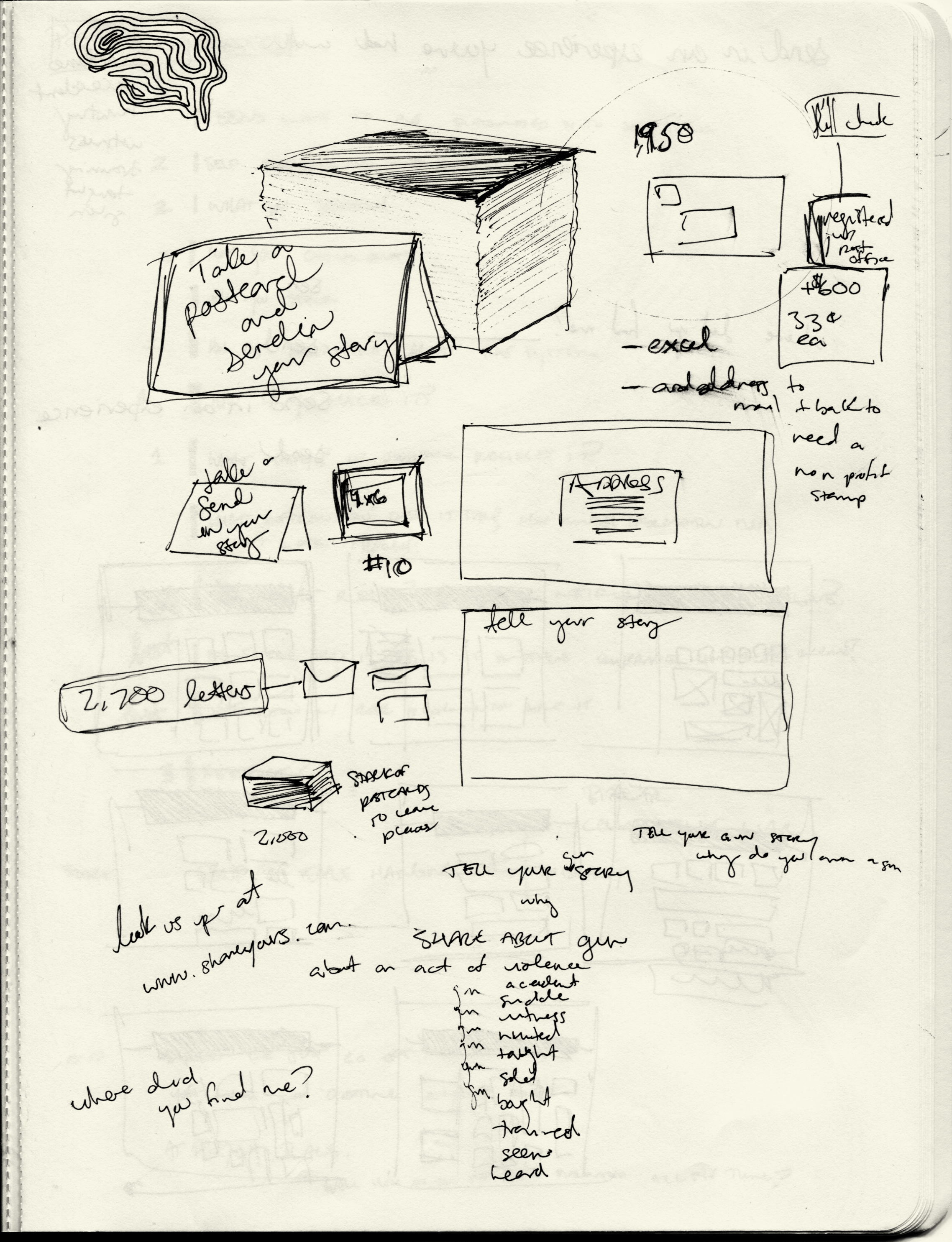
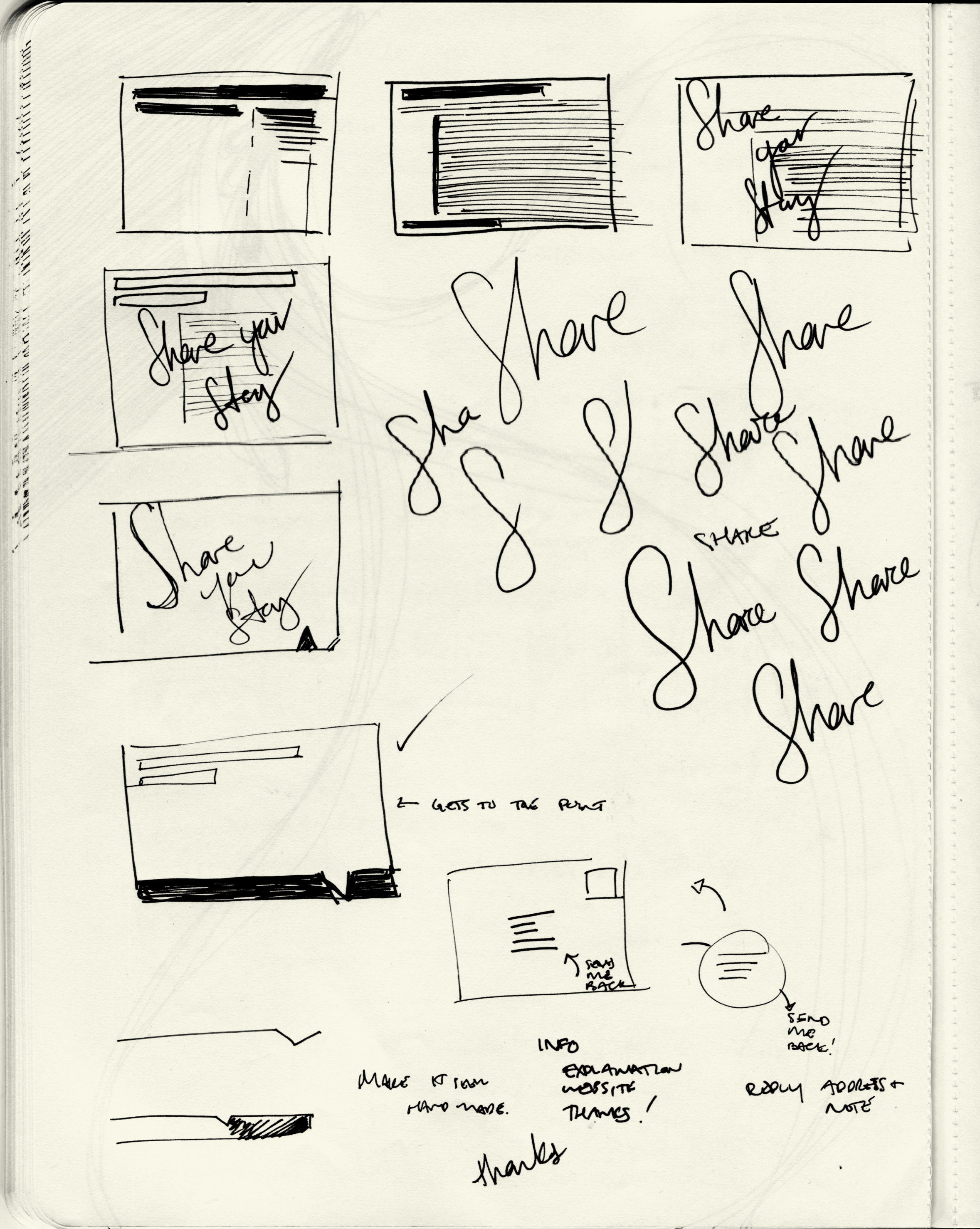
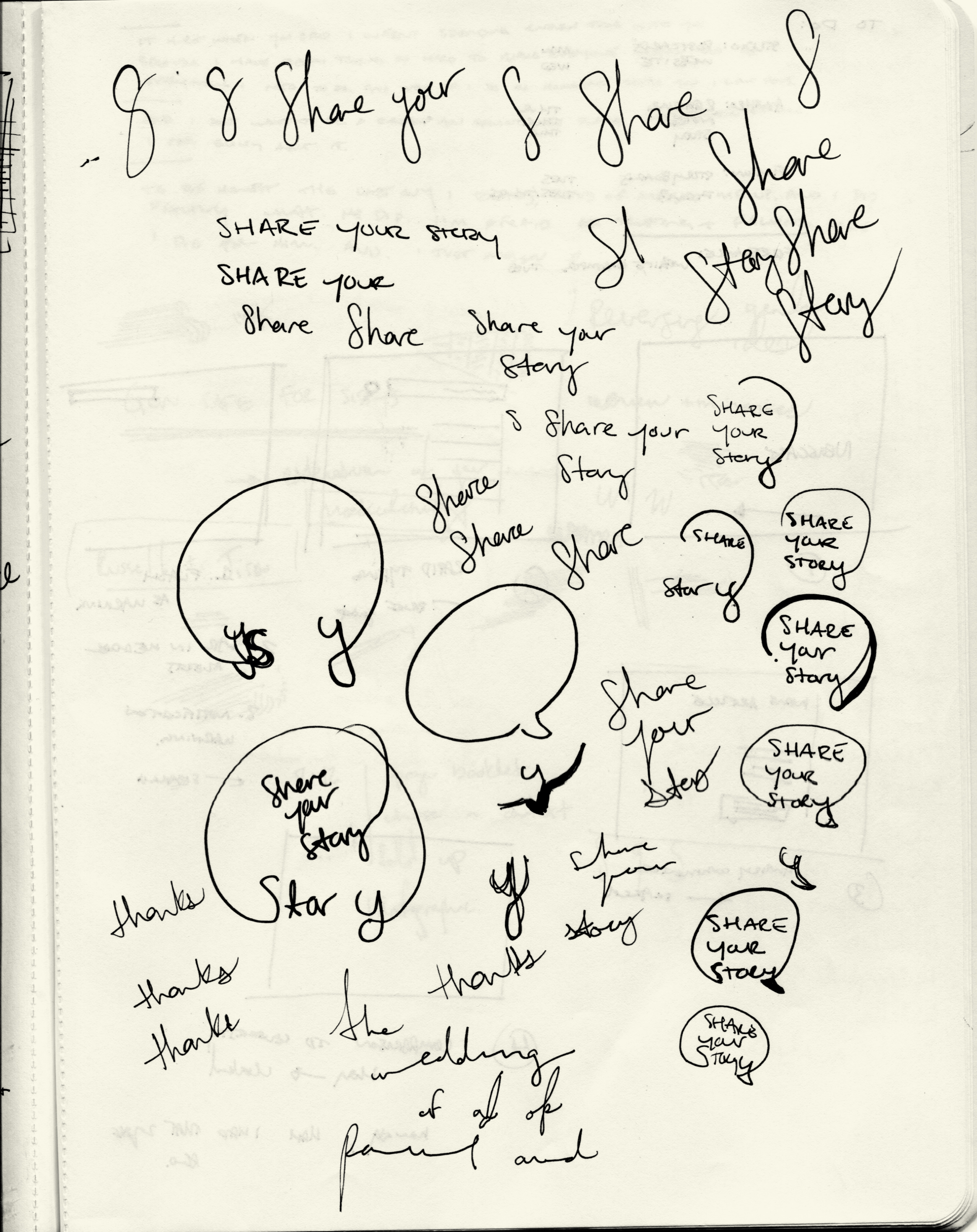
I started out by sketching different layout possibilities for my postcard, the goal of the postcard is to:
1. start a conversation
2. let them know all perspectives are welcome
3. recipient shares their story
3. recipient sends it back
4. recipient checks out the website
this method will hopefully demonstrate
1. if people will communicate through anonymity
2. if people are interested in other’s stories
3. if people will take action on this topic
4. if it cultivates many perspectives or just one
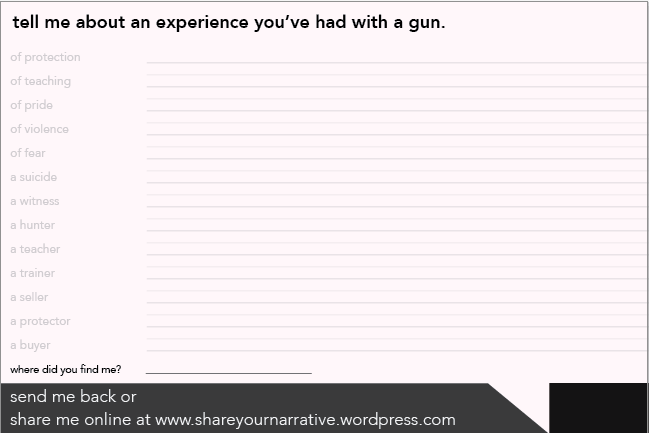
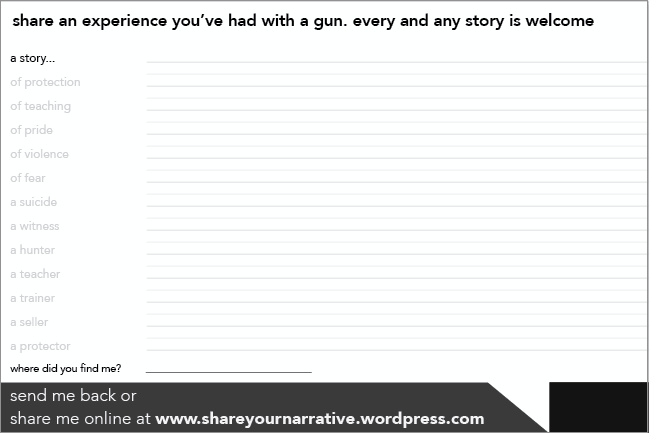
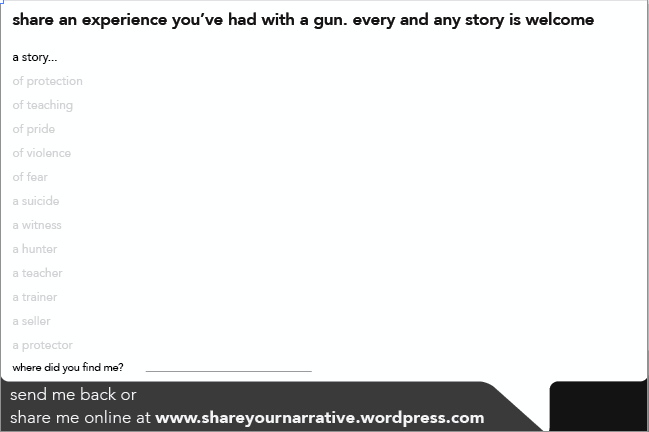
After a couple of critiques and discussions about word choices my final design became this:
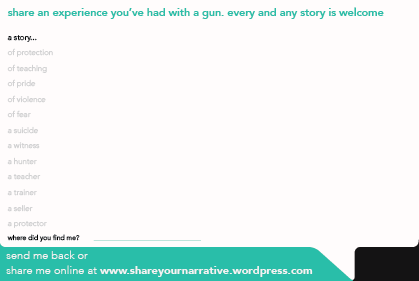
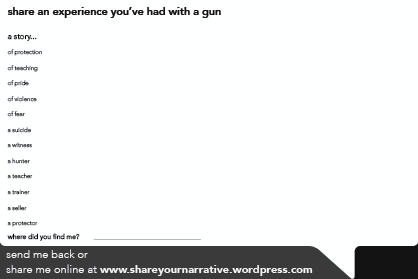

I’m sending out the about 1950 black and white versions to the local cmu area and hopefully I’ll get some responses! I’m picking up the prints on Monday and my Tuesday I’m hoping to give them to the mailers who will mail them out the neighboring CMU houses.
I’m hoping to print around 300 color copies to leave at local coffee shops and see if anyone will pick them up once they see them. This way I can also tell if someone received it by mail or by picking it up. Reese has been closed, but I’m hoping to print them before thursday, but with such a large print I will need to print it myself in Reese.
I’m almost done with the wordpress blog, but I now need to populate it by actively asking people I know to possible share and submit their stories, and to test it to make sure it correctly works. I’m hoping to ask a range of people form different perspectives so visitors feel like they can share anything.
“Share of Homes With Guns Shows 4-Decade Decline”
Another example of the difference between the reality and what is perceived or portrayed by the media – while many reported that there was a significant increase in gun ownership in the recent years because of mass shootings, according to this study that may not be the case.
 design, place & social innovation studio